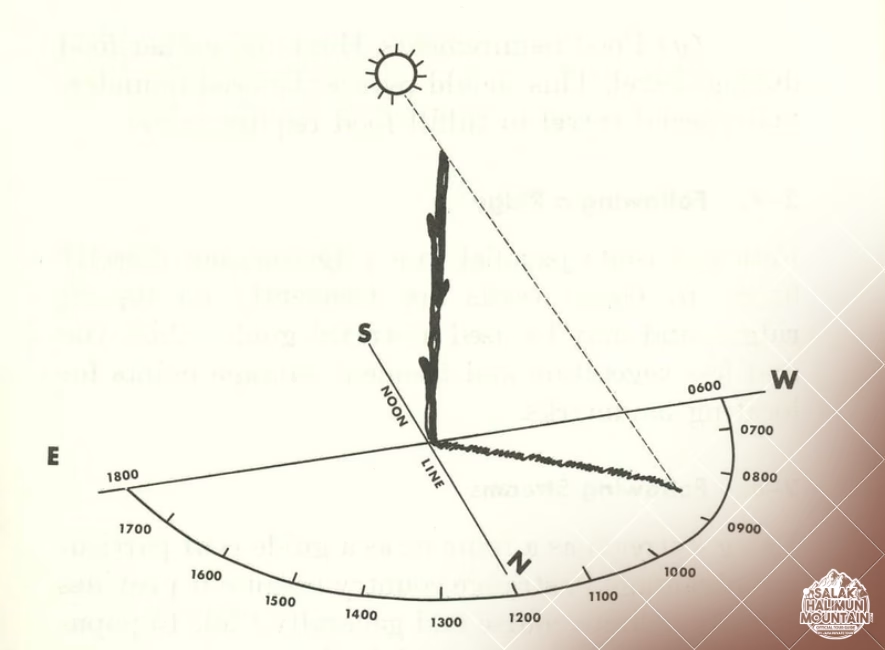
salakhalimunmountain.com – Trekking deep into the primeval heart of Halimun Salak National Park brings far more than the physical satisfaction of conquering steep volcanic ridges or navigating slick single-tracks. Beneath the dense canopy light filtering through leaves and beyond the soft mud trails, the ancient rainforest hums with a deep, invisible cosmic order. For the mindful explorer, looking up toward the celestial bodies and finding direction through the shifting sky reveals a powerful sensory marvel. Using sun and stars to navigate Mount Salak forests opens a sacred window into a timeless philosophy of balance, stellar connection, and environmental guardianship.
In our modern, fast-paced society, we often divide our lives into rigid, isolated boxes—separating human presence from cosmic movements, and our urban minds from the natural rhythms that have guided travelers for millennia. In contrast, the highland communities surrounding Mount Salak live by a unified trinity of cosmic law alongside deep-rooted social and ecological etiquette. Known as Tri Tangtu (The Three Absolute Pillars) and Tepo Seliro (mutual empathy), these ancestral philosophies serve as the ultimate blueprint for structural governance, spatial design, and personal conduct—including how the community reads the stars to direct their lives. By understanding how these concepts shape everything from local agricultural cycles to the ecological zoning of the primary forest, we discover an inspiring model of sustainable living that has kept Java’s premier mountain kingdom perfectly balanced for generations.
The Cosmic Pillars of Celestial Orientation: Tri Tangtu
At its core, Sundanese wisdom relies heavily on Tri Tangtu, which represents the three absolute truths or pillars required to maintain perfect cosmic and social equilibrium. In traditional philosophy, these three interconnected pillars are personified through three distinct societal roles or principles of leadership: Rama (The Ancestors/Founders), Resi (The Spiritual Sages), and Ratu (The Secular Leaders/Administrators). Together, they form an unbreakable triangle of checks and balances where no single pillar can dominate the others.
In the context of stellar observation, daylight tracking, and directional orientation within the primary jungle, the pillar of Rama represents historical continuity, ancestral astronomical charts, and the foundational laws of nature passed down through generations of oral histories. The pillar of Resi embodies the spiritual purity, moral guidance, and deep cosmic insight required to interpret the movements of constellations like Orion or the Southern Cross, ensuring that human interactions with the sky never disrupt the mountain’s sacred spiritual balance. Finally, the pillar of Ratu represents the practical management, daily administration, and physical enforcement of community harvest times and seasonal travel rules to maintain the community’s welfare. This structure ensures that the overhead heavens are never treated as mere scenery, but as a sacred compass for human existence.
The Dynamic Harmony of the Solar Path
Within the highland community structure—most beautifully preserved among the traditional Kasepuhan settlements—this tripartite philosophy prevents the reckless exploitation of the high-altitude landscape. If an administrative choice or new structural development near a traditional observation point is proposed (the Ratu element), it can never be made based on economic ambition or commercial greed alone.
The proposal must first be weighed against the ancestral customs guarded by the elders (the Rama element) and evaluated for its spiritual and ecological harmony by the spiritual guides (the Resi element). This deep, continuous exercise in mutual consultation and respect ensures that every administrative choice aligns perfectly with cosmic ethics and communal peace. It creates an atmosphere of complete trust and social safety, allowing the highland villages to remain incredibly resilient while keeping the mountain’s old star-tracking pathways completely undisturbed.
The Spatial Application of Celestial Geography
What makes these traditional philosophies truly revolutionary for modern conservationists is how the highland communities apply them directly to the geography of the volcano to safeguard the forest ecosystems beneath the stars. To the traditional mind, the physical landscape is a living mirror of cosmic order. They express this by strictly zoning the Halimun Salak forest into three distinct ecological realms, matching the spiritual hierarchy of the universe.
The first realm is the Upper World, mapped geographically onto the highest volcanic peaks, clearing zones, and primary watersheds, known traditionally as Leuweung Titipan (The Entrusted Forest). This is the untouchable, sacred core of the mountain—a realm reserved purely for spiritual energy, where the night sky opens completely above the dense jungle floor completely undisturbed. Humans are strictly forbidden from clearing or altering this forest. By keeping this high canopy completely untouched, traditional law protects the clean air zones that allow the stars to shine bright without the interference of human pollution.
The Buffer Zones and Shrouded Canopies
The second geographic realm of the trinity is the Middle World, represented by the Leuweung Tutupan (The Forbidden/Prohibited Forest). This functions as a vital ecological buffer zone. While community members may enter this forest with deep reverence to gather wild medicinal plants or fallen wood, absolutely no commercial logging or canopy destruction is tolerated. The structural integrity of this forest must be preserved to protect the dense leaf networks that filter the sunlight, which sustain endemic wildlife, including the Javan leopard and the vocal silvery gibbons.
The third and final realm is the Lower World, represented by the Leuweung Garapan (The Cultivated Forest). This is the designated domain of active human utility, where families build their terraces, grow heirloom mountain rice based on stellar alignments, and live their lives. Because this lower realm is structurally connected to the middle and upper worlds, its use is heavily guided by the ethical principles of Tepo Seliro (mutual empathy). Human footprint is kept to a modest scale, ensuring that nighttime illumination blends harmoniously with the dark landscape rather than leaving an ecological scar on the surrounding wilderness.
Tepo Seliro: Active Empathy for the Natural Rhythms
To grasp the true depth of local natural conservation, one must look closely at Tepo Seliro. While often translated simply as “tolerance” or “politeness,” in Javanese and Sundanese ethics, the term translates closely to “the measurement of oneself.” It is a highly active, emotional form of empathy that requires a person to constantly look inward before interacting with the outer world. The core teaching asks a simple yet powerful question: “If a specific action, word, or attitude would cause pain, degradation, or discomfort to you, why would you inflict it upon another living entity?”
What makes this philosophy particularly inspiring to modern conservationists is how this empathy extends past human relationships to include the entire natural world, including the cycles of day and night that govern the forest. The local people do not view Halimun Salak National Park as a mere collection of economic resources to be harvested or exploited. Instead, through the lens of Tepo Seliro, the natural environment is treated as a living, breathing entity with its own rights, rhythms, and dignity that must be deeply respected.
A Celestial Mirror of Respect
Guided by this ecological empathy, the methods of traveling by natural light are treated not just as backup navigation skills, but as a system to prevent human presence from upsetting the nocturnal forest balance. Human behaviors are carefully modified to avoid creating artificial light pollution or noise along the trails at night. Minimizing large camp torches and observing the canopy shadows naturally is strongly encouraged, ensuring that the nocturnal movements of the wildlife can exist without human disruption.
This deep respect ensures that the delicate home of the endangered Javan leopard, the vocal silvery gibbons, and thousands of unique bird species remains completely protected and undisturbed for generations to come. Furthermore, any modern navigational tools brought into the park are managed sustainably, returning with the traveler to ensure that no plastic waste or dead batteries compromise the volcanic soil, completing a perfect, sustainable loop of life, stellar wisdom, and environmental preservation.
Lessons for the Modern Trekker: Cultivating Mindful Celestial Pathfinding
For the modern backpacker, trail runner, or researcher arriving from a fast-paced urban environment, using sun and stars to navigate Mount Salak forests is a transformative experience. It challenges us to look beyond the surface beauty of the rushing rivers and misty ridges and reflect deeply on our own relationship with the wider universe. It reminds us that we are not conquerors of the wild, but humble extensions of its delicate cosmic balance.
Practicing the spirit of these ancestral laws as a traveler means stepping onto the mountain trails with a humble spirit, an open heart, and a strict commitment to trail ethics. It means honoring the sacredness of the primary forest by practicing flawless Leave No Trace principles—ensuring that we secure all our gear inside our waterproof backpacks, turn down high-powered artificial lights, and never leave tracking markers behind within the pristine rainforest ecosystem. By sticking mindfully to established single-tracks, we prevent path damage and show deep respect for the designated zones where the mountain slopes rise free beneath the open sky.
An Enduring Legacy to Carry Forward
When you eventually step off the volcano and return to your daily life, the true treasure of your journey is not measured by the high elevations you climbed or the photographs stored on your camera. The ultimate gift of Mount Salak is carrying this ancestral wisdom back down into your daily lifestyle. It inspires us to seek balance within ourselves—harmonizing our personal ambitions (our administrative Ratu) with moral and environmental ethics (our spiritual Resi) and historical wisdom (our ancestral Rama).
By sharing these profound cultural philosophies, supporting local indigenous guides, and choosing responsible travel experiences that honor ancestral heritages, we help ensure that the sacred balance of Halimun Salak remains protected for generations to come. Walk softly across the ridges, listen to the ancient rhythm of the canopy, and let the trinity of the mountain guide your stride. Pack light, camp mindfully, and let the journey unfold.
So, if you’re ready to explore the wonders of Mount Salak Halimun, head over to our ONLINE BOOKING PAGE and let’s start planning your adventure. Or simply CLICK THIS LINK to chat with us on WhatsApp.
With our team, you’re not just getting a guide; you’re gaining a local friend who will ensure your trip is nothing short of extraordinary.